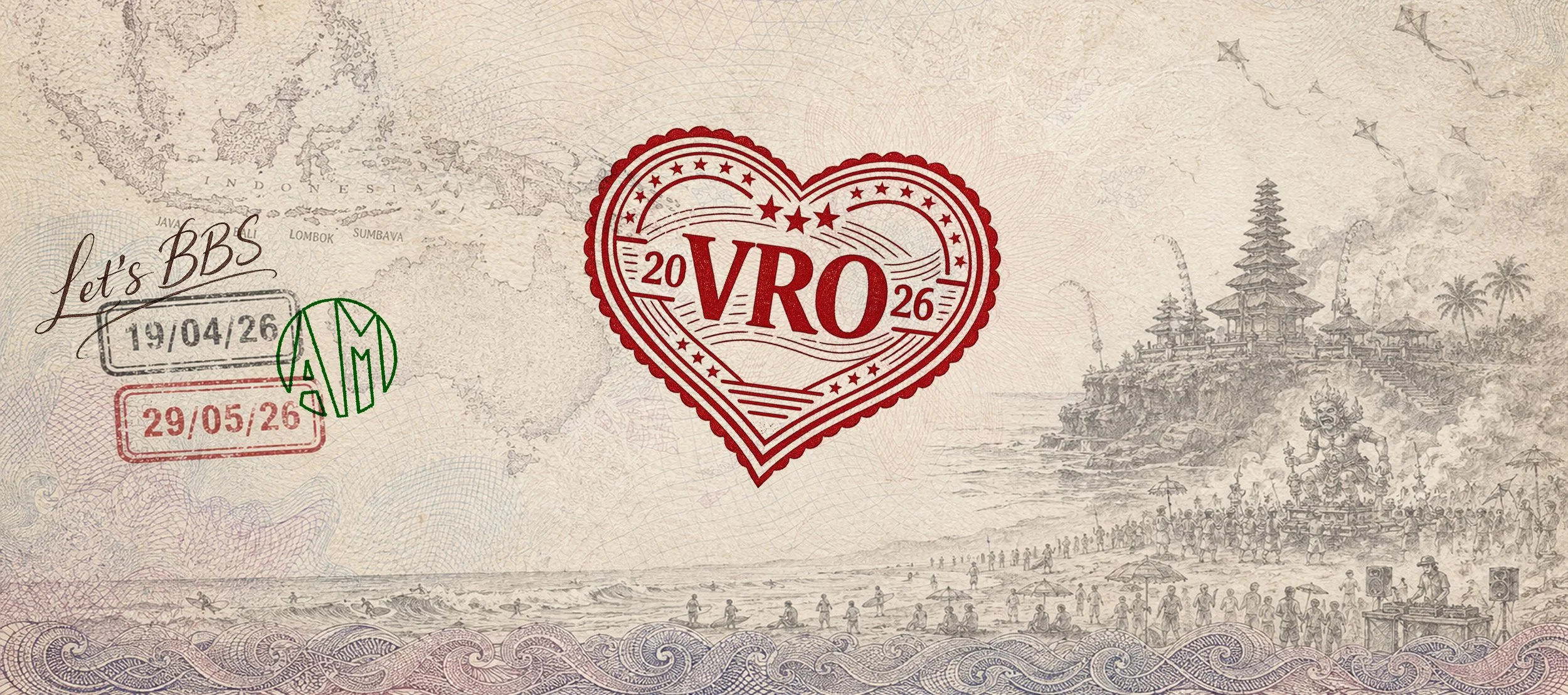
It’s Not Bro, It’s VRO
When Warmth Gets Lost in Translation
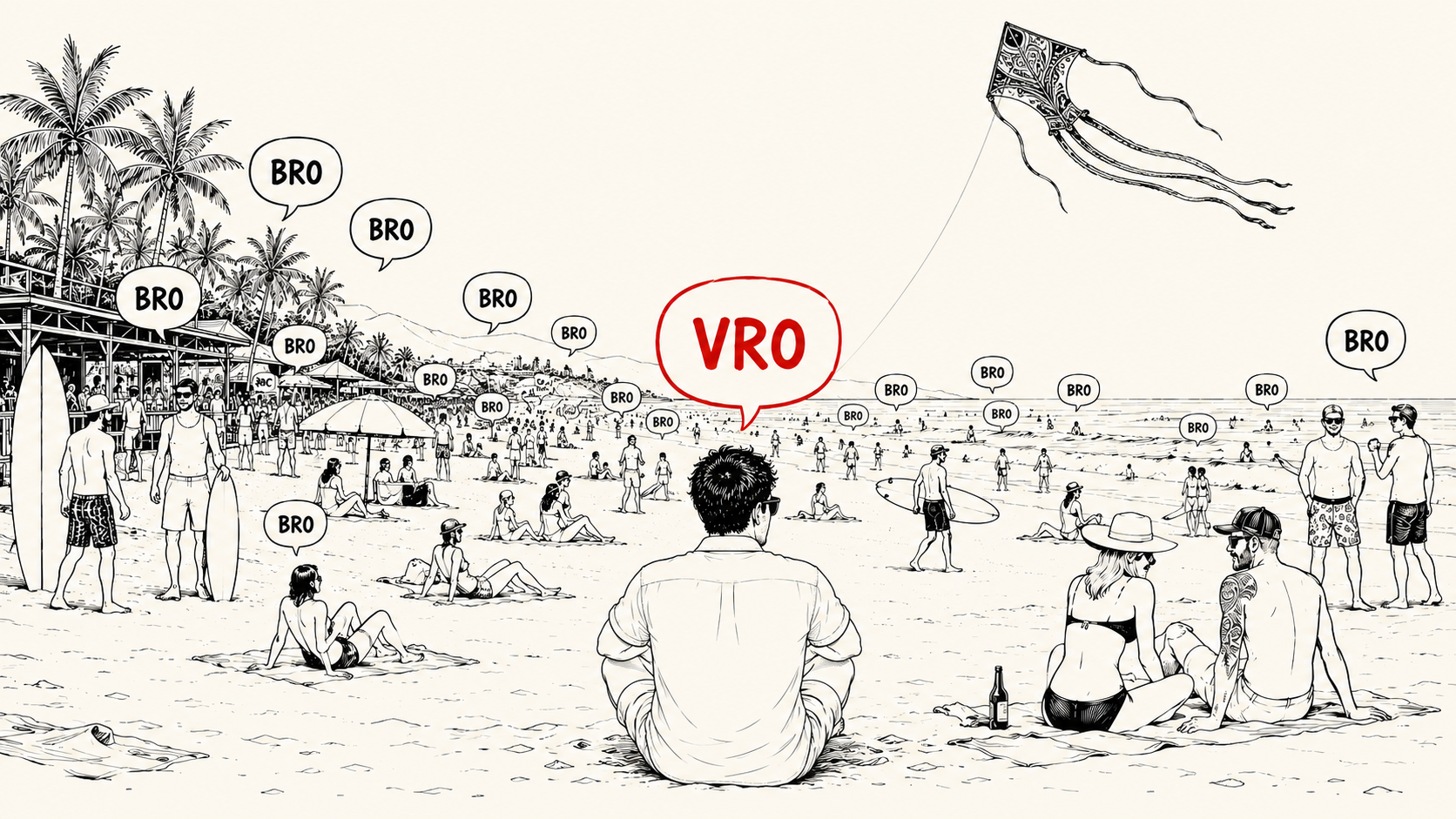
In Bali, bro often arrives before your name. A waiter says it while taking your order, a new contact places it in his first message and a stranger adds it to a proposal, an invitation or a request. Sometimes it is sincere, sometimes it is commercial and most of the time it is harmless. It still irritates me. The problem is not warmth or informality. Bali would lose part of its beauty if every encounter began behind a wall of ceremony. What unsettles me is the relationship the word establishes before that relationship exists. Bro suggests familiarity, trust and masculine camaraderie, yet it is often spoken by someone who does not know me, has barely asked my name and may never see me again. A single syllable removes a distance that I had not agreed to surrender.
My first reaction was to see it as another expression of Bali’s culture of instant intimacy. On an island where friendships, partnerships and entirely new identities can be announced after a single conversation, bro feels perfectly at home. It makes every exchange sound relaxed, including those involving money, work or responsibility. But irritation is not the same as understanding, and personal discomfort should not be mistaken for cultural truth. Another social logic is at work. In Bali, as elsewhere in Indonesia, warmth is not always expressed by preserving distance. Names, nicknames and family-related forms of address position people in relation to one another before a personal relationship has fully developed. What sounds overly familiar to a foreign ear can function as courtesy, recognition or a way of making an exchange less anonymous.
I have never personally heard anyone call me bli. I have, however, been called Made. It belongs to the Balinese naming tradition and is commonly connected to birth order, but it is neither my name nor a description of my place within my family. A foreigner once explained that it was being used affectionately towards me, as a small Balinese nickname. I cannot know exactly what the person saying it intended, but I received the gesture as something gentle. I did not fully understand the cultural grammar behind being called Made, yet I could hear its softness. The word belonged to the place and carried none of the familiar associations of my own language. It did not sound as though someone was pretending that we had already shared a history. It felt like a temporary invitation into a local way of recognising another person.
When the same desire for proximity reaches me through the English word bro, something changes. The warmth can remain while the music disappears. In English, bro arrives with its own social baggage: internet slang, masculine posturing, commercial informality and an intimacy performed more quickly than it can be earned. The speaker may believe he is making the encounter warmer while the listener feels that a boundary has been crossed. They understand the same word but assign different meanings to the relationship it creates. Bali makes this tension especially visible because several ideas of familiarity coexist here. Balinese customs, wider Indonesian social codes, international tourism, hospitality language and expatriate habits meet in the same restaurants, gyms, villas and WhatsApp conversations. People appear to be speaking the same English while translating different ideas of courtesy, connection and respect.











This kind of social friction lies at the heart of Visa Run Orchestra. From Bali Bule Society to Padel Is Life and Until It’s Reel, the songs treat Bali not simply as scenery, but as a social stage where language, status, aspiration and belonging are observed before being turned into music. The comedy often begins in the gap between what people believe they are projecting and what everyone else can actually see. A waiter may say bro because it feels warmer and less hierarchical than sir, boss and mister. A professional contact may use it to make an exchange less rigid. A foreign resident may repeat it because he believes this is simply how people speak in Bali. None of these uses necessarily contains disrespect.
Yet intention does not entirely determine how language is received. Bro can sound artificial when it replaces a name. It can make a commercial relationship imitate friendship and suggest equality while avoiding the precision, courtesy or accountability that a real relationship requires. A proposal begins with bro, a favour is requested with bro and a delayed payment ends with sorry, bro. Familiarity remains effortless until responsibility enters the conversation. Some foreign residents adopt the word so enthusiastically that it becomes a costume of belonging, as though saying bro often enough proves that they have understood Bali. The expression joins a broader performance of permanent relaxation: no hierarchy, no formality, no distance and apparently no need to learn anyone’s actual name. Imitation, however, is not understanding, and informality is not intimacy.
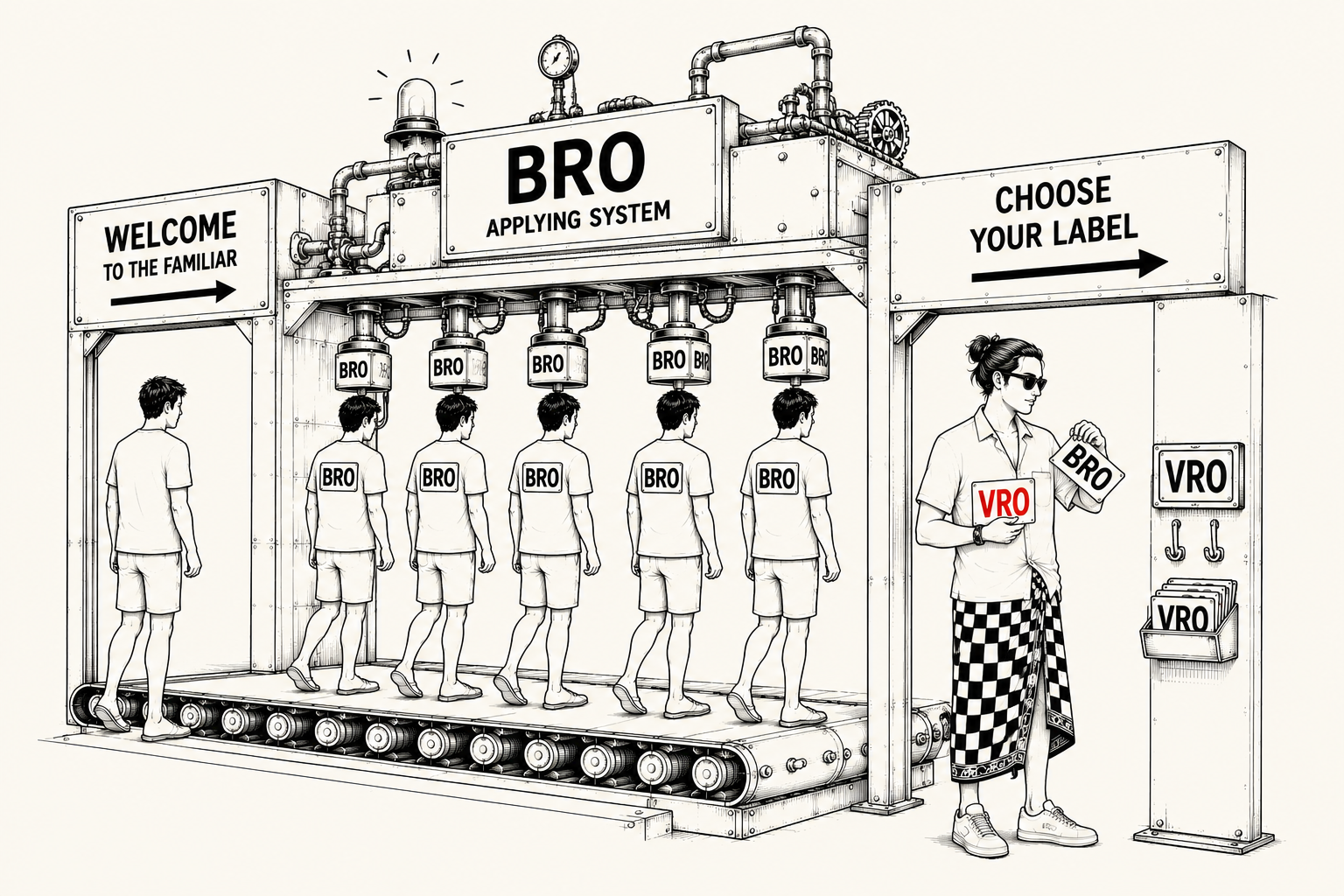
My own resistance also deserves examination. I associate respect with a certain degree of distance because that is how I learned to interpret politeness. Someone else can experience the same distance as coldness, arrogance or rejection. Living in another culture cannot mean demanding that every encounter obey the emotional rules one brought in a suitcase. Adapting to Bali also means accepting that connection is often offered more quickly and expressed more openly than I am accustomed to. The question is therefore not whether people in Bali should stop saying bro, but what happens when warmth crosses languages. When does an affectionate form of address create connection, and when does it claim intimacy too quickly? A Balinese person, an Indonesian newcomer, a restaurant employee and a European expatriate can all use the same word for different reasons. The person hearing it brings another collection of meanings, memories and boundaries.
Familiarity is neither generous nor intrusive by nature. Its meaning depends on context, behaviour and what follows the word. Warmth can be offered immediately, but trust cannot. Language can open the door to a relationship, yet it cannot create that relationship by itself. Sometimes the smallest form of respect is simply to notice how another person wishes to be addressed.
So don’t call me bro. Call me VRO.