Nusa Lembongan
Bali at a Different Pace
I discovered Nusa Lembongan only a few weeks after arriving in Bali. Perhaps that is why I never really considered it an excursion from Bali. To me, it was Bali, simply operating at another speed. A short boat ride from Sanur is enough to change the rhythm completely. The crossing takes roughly thirty to forty minutes, yet when you arrive at Jungut Batu or Mushroom Bay, the accumulated noise of the main island suddenly feels considerably further away. There are no streams of conventional cars, no Grab traffic fighting its way through an intersection and very little of the permanent mechanical agitation that has become part of daily life in southern Bali. Scooters dominate the roads, alongside bicycles, buggies and the small open pick-up trucks used for local transport.
It is not silent. Nor is it untouched. But it breathes differently. The island is small (less than nine square kilometres) and still sufficiently compact that distances quickly become familiar. Jungut Batu, Mushroom Bay, the mangroves in the north, the cliffs and beaches further south: after a couple of days, what initially looked like a destination begins to feel more like a neighbourhood surrounded by sea.
And that is precisely why I think many visitors make a mistake with Lembongan. They save it for the end. A final night or two before leaving Indonesia. A little decompression chamber after Bali, as though the island were somehow outside the main story. I would do exactly the opposite. Make Lembongan part of your Bali.
There is something here that recalls a less hurried version of the island: evenings that settle earlier, narrow roads rather than major arteries and a daily life that still maintains visible connections with fishing, boats and seaweed cultivation. Seaweed farming has been part of the economy of the Nusa islands since the late 1970s and, although tourism transformed that balance considerably, cultivation returned strongly during the pandemic and remains part of Lembongan’s landscape and identity.
Then there is the water. Lembongan belongs to the wider Nusa Penida marine conservation area, and much of what makes the island exceptional begins precisely where the land ends. Snorkelling, diving, surfing, paddleboarding and small boats through the mangroves give the island a relationship with the sea quite different from simply spending another afternoon on a Bali beach.
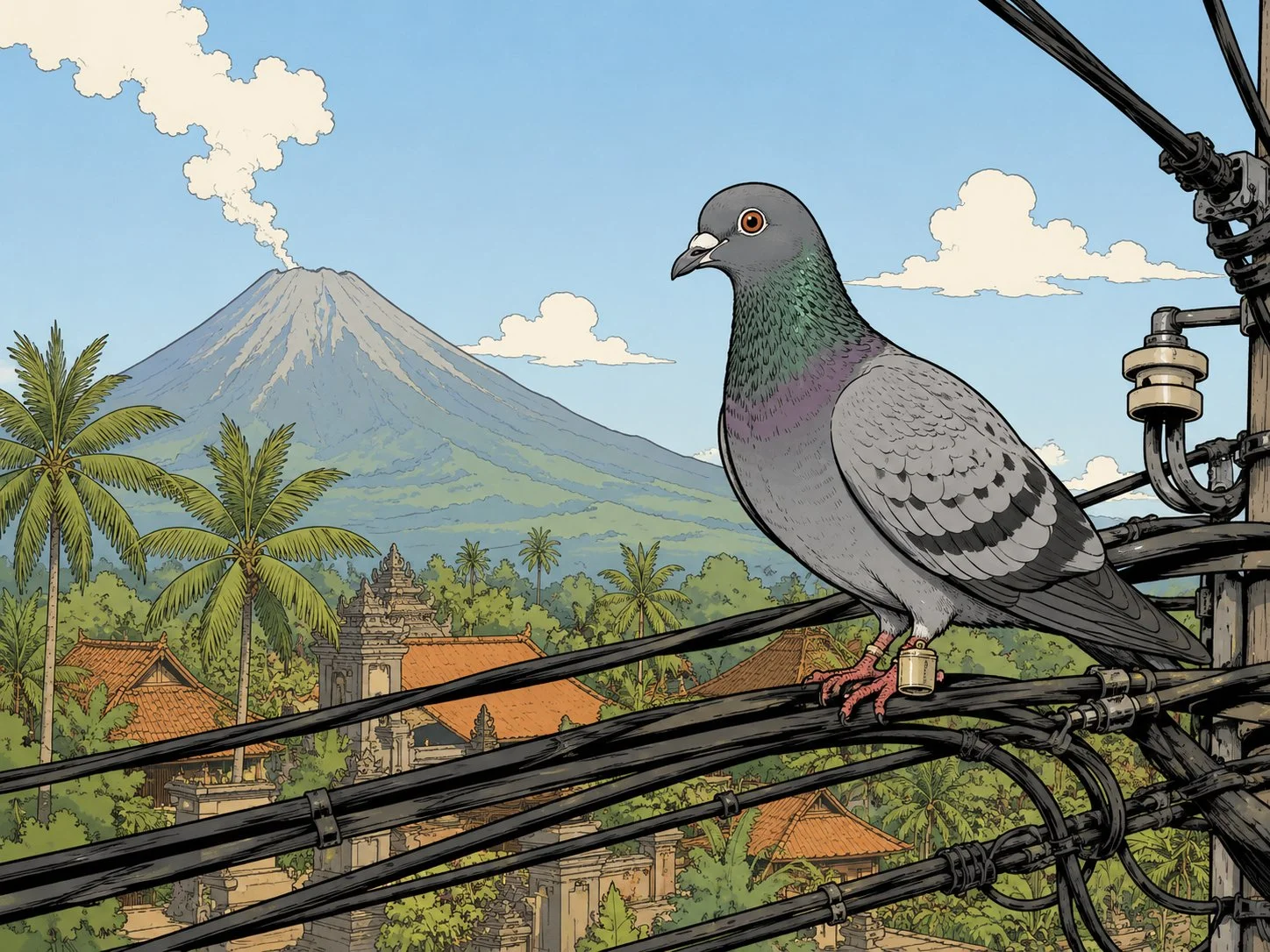
The northern coastline remains my favourite expression of it. From there, Bali itself becomes the landscape. The sea stretches out in front of you and, on a clear day, the mountains of the main island rise across the water, with Mount Agung dominating the horizon. It is a strange and beautiful reversal: you have travelled away from Bali in order to look back at it properly.
Lembongan also has that rare quality of being relaxing without demanding that relaxation become an organised activity. You do not need a wellness programme. You do not need to book a sound bath. Sometimes a scooter, a beach, a warung and several hours with nowhere particularly urgent to be will accomplish the task perfectly well.
Of course, the island is changing. Tourism is growing quickly across Lembongan, Ceningan and Penida, and Bali’s own planning authorities now openly acknowledge the pressure that development is placing on water supplies, infrastructure and the environmental carrying capacity of the islands. You can see it happening. New buildings appear. Land changes hands. Another patch of landscape acquires concrete and an infinity pool. Paradise has an unfortunate habit of becoming extremely desirable and then being gradually constructed out of existence.
Lembongan has not reached that point. But I would not assume it will wait forever. So go. Not because it is an untouched secret, it absolutely is not. Go because it is still possible to spend several days there and feel the tempo change. Explore the mangroves. Swim. Ride around without a programme. Cross over to Ceningan. Eat somewhere small. Watch Bali’s mountains from across the water. And most importantly, do not treat Lembongan as the place you visit when you have finished discovering Bali. It is part of the discovery.
Island
Nusa Lembongan
Nusa Penida District
Klungkung Regency
Bali, Indonesia
Getting there
Fast boats leave Sanur throughout the day for Nusa Lembongan, with the crossing generally taking around 30–40 minutes depending on sea conditions.
I usually recommend Setia Fast Ferry for the crossing to Jungut Batu. Their boats are modern and comfortable, and they can also arrange transfers on both sides of the journey. Arrival at Jungut Batu may involve a short transfer onto the beach, so be prepared to get your feet wet — this is Lembongan, after all.
Price
$$ — Moderate once transport and accommodation are included.
There is no need for an expensive itinerary; your principal costs are the boat, accommodation and whatever transport or activities you choose on the island.
Go for
The mangroves, beaches, snorkelling and diving, slow roads, seaweed landscapes and extraordinary views back towards Bali and Mount Agung.
Get around
Scooter remains the easiest option for confident and properly licensed riders. Bicycles, buggies and local open pick-up transport are alternatives. Roads are narrow and can be uneven, so the lack of conventional car traffic should not be mistaken for an absence of road hazards.
Take with you
Very little. Swimwear, sunscreen, something light for the evening and enough clothing to justify staying longer than one night.
While you’re here
VISITING•LEMBONGAN SURF SPA
STAYING•Mangrove Beach Hut
EATING•JJ’s BurgERS
EATING•La Bianca
Recommendation
Do not come only for the day and do not automatically save Lembongan for the end of your trip. Give it at least two or three nights and allow the island to become part of your experience of Bali rather than an excursion away from it.